Brew the Math: Six Indian Teas That Undercut Your Coffee Shop Habit by 90%
Let's start with a number that stings. A grande latte at a US coffee chain now lands somewhere around $5.75 to $6.25 depending on your city and your milk of choice. Call it $5.95. Five mornings a week, 52 weeks a year: $1,546.75. That's not a coffee habit. That's a used car you're drinking through a paper straw.
I'm not here to tell you to quit coffee. I'm here to point out that the tea aisle of an Indian e-commerce site is selling you a cup of world-class leaf for the price of the little paper sleeve your barista puts around your cup.
The Coffee Math, Written Out
| Habit | Cost per cup | Cups per year (5x/week) | Annual total |
|---|---|---|---|
| Coffee shop latte | ~$5.95 | 260 | ~$1,547 |
| Home espresso (beans + milk + machine amortized) | ~$0.85 | 260 | ~$221 |
| Loose-leaf Indian tea, hot | ~$0.22 | 260 | ~$57 |
| Loose-leaf chai with milk and sugar | ~$0.45 | 260 | ~$117 |
The gap isn't a coupon-clipping gap. It's an order-of-magnitude gap, and it exists because tea is priced by weight while coffee shops price by experience, labor, rent, and the word "artisanal."
What a Cup of Assam Actually Costs
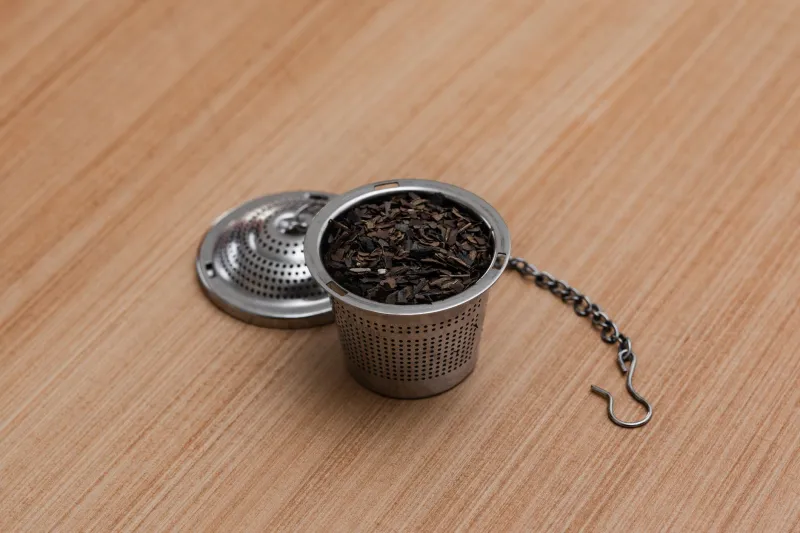
A 100-gram tin of good Indian loose-leaf runs between $8 and $15 depending on the estate and whether it's organic. At roughly 2 grams per 8-ounce cup, that tin makes about 50 cups.
Do the division: $9 for 50 cups is 18 cents a cup. Even the fancy $15 Darjeeling first flush sits at 30 cents. Add milk and sugar and you're still under 50 cents — a tenth of your latte, with a better story at the office.
Six Indian Brands Worth Your First Tin
Prices move around, so treat these as ballpark figures at the time of writing rather than promises.
1. Vahdam
Probably the easiest entry point for a US buyer. Single-estate Assam and Darjeeling, clean packaging, and a US-side fulfillment setup that means you're not waiting three weeks. Expect roughly $10 to $16 for a 100g tin, less per gram if you buy a larger pouch. Their sampler boxes are the low-risk way in.
2. Teabox
Kolkata-based, obsessive about freshness dates, and generous with sample sizes. This is the brand for someone who wants to taste six estates side by side before committing. Shipping to the US is fast, and their single-estate lots rotate with the harvest — which is either thrilling or annoying depending on your personality.
3. Halmari
An Assam estate that sells its own leaf rather than disappearing into a blend. Malty, thick, and forgiving if you oversteep it, which makes it a good starter for people coming off coffee. Usually in the $8 to $13 range per tin.
4. Goodricke
A heritage Darjeeling name with a wide catalog. If you want to understand why people fuss over "muscatel" in a first flush, this is a reasonable place to learn. Availability in the US fluctuates, so check stock before you build a habit around a specific lot.
5. Golden Tips
A broad Darjeeling and Assam range, including gift-ready sets. Good for the person who wants one order to cover both their morning strong cup and their afternoon delicate cup.
6. Assamica Agro
Small-farm, organic-leaning Assam. Tends to run $10 to $14. The leaf is less uniform than the big estates, which is part of the charm — and part of why it's priced like a farmer's market rather than a boutique.
The Brewing Rules That Decide Whether It Was Worth It
Cheap tea tastes cheap for two reasons, and neither is the tea.
- Water temperature. Black tea wants water just off the boil — around 200 to 212°F. Darjeeling first flush prefers slightly cooler, closer to 195°F. Boiling the daylights out of a delicate leaf pulls out bitterness.
- Ratio. One heaping teaspoon (about 2 grams) per 8 ounces of water. Use a scale once and you'll never guess again.
- Time. Three minutes for most Assam, two to three for Darjeeling. Set a timer. "A few minutes" is how people end up with tannin soup.
- Don't squeeze the bag — or in this case, don't press the leaves. It releases harsh compounds.
If you want chai instead
Simmer 2 teaspoons of Assam with 4 ounces of water for two minutes, add 4 ounces of whole milk, bring to a gentle boil, add sugar, and simmer another two minutes. That's it. No $7 concentrate bottle required.
Where the Coffee Habit Still Wins
Honesty time. A tea tin doesn't give you a walk, a five-minute break from your inbox, or the small social ritual of a counter conversation. If your latte is really a $6 excuse to leave the building, buy the tea and still take the walk. The leaf is the cheap part.
The Two-Week Test
Don't liquidate your espresso machine. Order one $10 tin, brew it properly for two weeks, and keep your receipts. If the tea holds up on the mornings you're not desperate, you've found a habit that pays for itself by the second week.
That's the whole trick. Not deprivation — arithmetic.