I Replaced My Entire Sephora Shelf With Indian Pharmacy Brands — My Skin Didn't Notice, My Bank Account Definitely Did
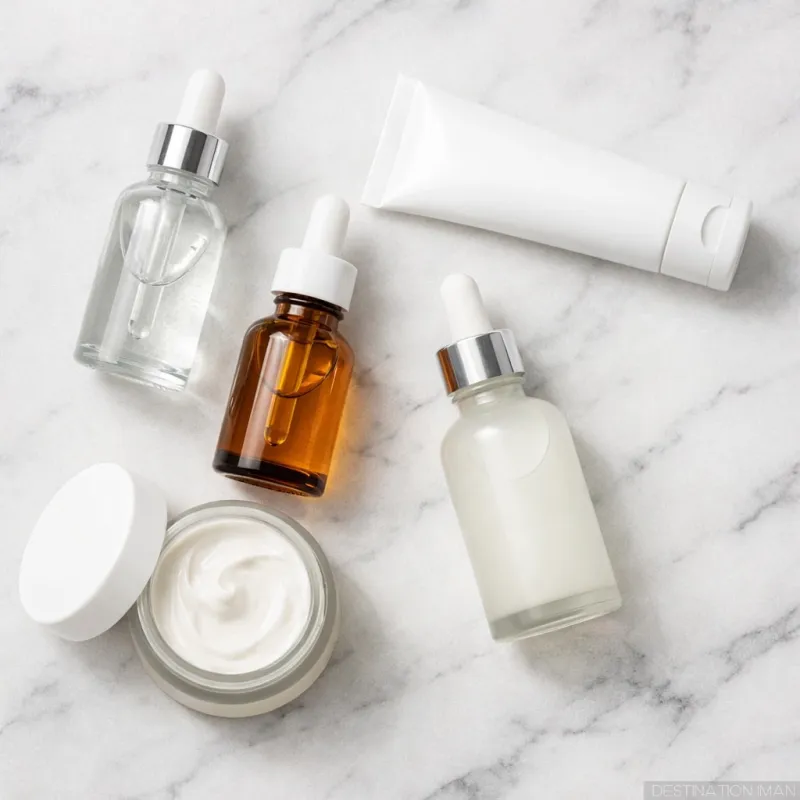
Photo: skincare products flat lay serum bottles affordable bathroom counter, via destinationiman.com
The Receipt That Started This Experiment
Last spring I tallied up what I was spending on skincare and nearly deleted the app. Cleanser from a trendy LA brand: $38. Vitamin C serum: $62. Moisturizer with a French name: $54. Sunscreen that felt like a spa product: $48. Total: just over $200, every two to three months.
Here's what bothered me: when I actually read the ingredient lists, I kept seeing the same actives over and over. Niacinamide. Hyaluronic acid. Zinc oxide. These aren't proprietary compounds. They're commodity ingredients, and someone, somewhere, is selling them without the markup. I decided to find out how much of my routine's cost was product and how much was packaging, celebrity endorsements, and a really good brand designer.
The answer, after a month of testing Indian pharmacy and D2C brands: about 85% of it was markup.
The Rules of My Experiment
For 30 days, every product in my routine had to come from an Indian brand or Indian pharmacy shelf, ordered through Indian e-commerce platforms with international shipping. No double-cleansing experiments, no new actives — I wanted an apples-to-apples comparison. Same steps, same frequency, same skin.
I photographed my skin on day one, day fifteen, and day thirty under the same bathroom light. My partner judged the photos blind. Here's how it went, step by step.
Step 1: The Cleanser Swap — $38 to $6
The premium pick: A foaming gel cleanser with "green tea extract" front and center. The swap: Cetaphil or a comparable gentle cleanser from an Indian pharmacy — options from brands like Cipla's and domestic pharmacy staples run $4–7 a tube.
Reading both ingredient lists side by side was humbling. The $38 version's star ingredient sat behind three surfactants and two preservatives that appeared identically in the $6 tube. The only real difference? The premium bottle weighed more.
Where to order: Indian pharmacy platforms like PharmEasy and Netmeds ship internationally through consolidation services, or you can find these brands on Amazon India with a forwarding address.
Step 2: The Serum Swap — $62 to $12
The premium pick: A 15% vitamin C serum in a dark glass bottle. The swap: Minimalist (an Indian D2C brand founded specifically to fight beauty markups) or The Derma Co — both sell 10–16% vitamin C serums for $8–12.
This is where things got genuinely interesting. Minimalist publishes full concentration disclosures and third-party purity data on their website — more transparency than the $62 serum offered. My swap serum had L-ascorbic acid at a stated 16%, in opaque packaging to prevent oxidation, which is more than I could say for the fancy one.
If vitamin C isn't your thing, their niacinamide and hyaluronic acid serums run $6–9 and are genuinely excellent.
Step 3: The Moisturizer Swap — $54 to $9
The premium pick: A ceramide cream with minimalist Scandinavian packaging. The swap: A moisturizer from Dot & Key or a basic pharmacy ceramide cream — $7–11.
Ceramides, squalane, glycerin — the building blocks of a good moisturizer are the same everywhere. The Indian version was slightly heavier in texture, which my dry winter skin actually preferred. My partner, who has oily skin, used the lighter Dot & Key gel variant and had no complaints.
Step 4: The Sunscreen Swap — $48 to $8
The premium pick: A "weightless mineral veil" SPF 50. The swap: Indian sunscreens are famously good and famously cheap — brands like Aqualogica, Derma Co, and Fixderma sell SPF 50 formulas for $6–10.
India is a tropical country where sunscreen isn't a luxury purchase, it's a daily necessity for a billion people. That competition drives prices down and formulas up. My swap sunscreen left less white cast than the $48 version. This was, honestly, the most annoying discovery of the whole experiment, because it meant the most expensive product was also the most replaceable.
The 30-Day Results
Day 1 and day 30 photos, reviewed blind by my partner: no visible difference in texture, tone, or brightness. My esthetician (who I confessed to) said my skin looked "the same, which is what you want from a routine that's working."
The before/after verdict: identical skin, $165 saved per cycle. Over a year, that's roughly $650–800 back in my pocket — enough for a weekend trip, or, you know, more sunscreen.
What This Means for Your Wallet
The beauty industry's dirtiest secret is that ingredient costs are a tiny fraction of retail price, and the rest is marketing. Indian brands — especially D2C players like Minimalist, which built its entire identity around attacking this exact markup — prove you can get identical actives at a tenth of the cost.
You don't need to overhaul everything overnight. Start with the serum and sunscreen, the two biggest price gaps. Check the ingredient list of what you're using now, then search for the same actives from an Indian brand. Your skin can't tell the difference. Your statement can.
Prices verified at time of writing; international shipping and any customs fees will add a few dollars per order, so batch your purchases.