Skip the $180 'Artisanal' Version: 7 Indian Kitchen Workhorses That Cost Less Than One Target Haul
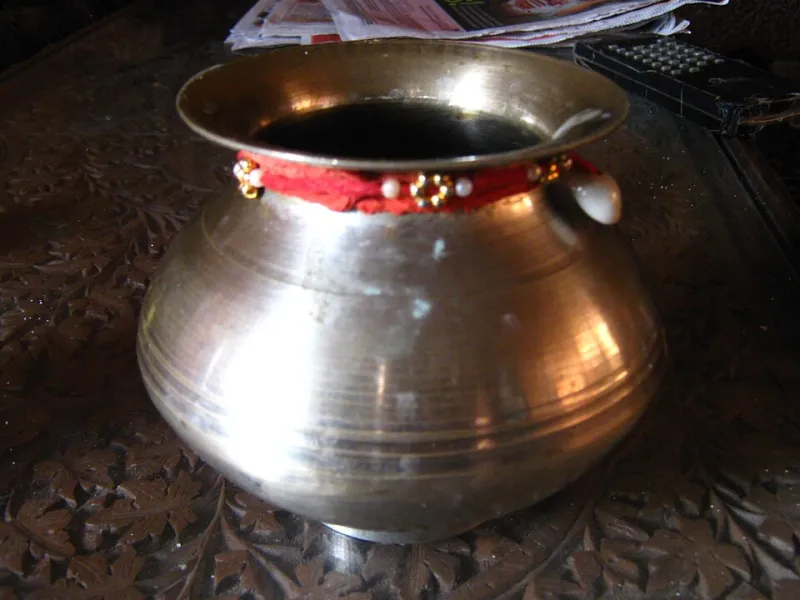
Photo: Ashish Bhatnagar, Public domain, via Wikimedia Commons
The Boutique Markup Problem
Walk into any upscale American home goods store and you'll find a cast-iron tortilla press for $75, a "hand-forged" spice grinder for $90, and a stovetop pressure cooker with a Scandinavian name for $180. Now walk into any Indian home and you'll find better versions of all three, bought for a fraction of the price, that have survived daily use for twenty years.
There's a reason for this. In India, these aren't novelty items — they're daily workhorses for households that cook from scratch, often multiple times a day. That demand supports massive domestic manufacturing, real competition, and continuous refinement. You get tools designed by decades of actual use, not by a branding agency. Here are the seven worth owning.
1. The Stovetop Pressure Cooker ($20–30)
What it does: Cooks beans, lentils, curries, and tough cuts in a third of the time.
The Indian pressure cooker is a national institution — brands like Hawkins and Presto (Prestige) have been refining the same basic design for over 60 years, with safety valves and gasket systems tested across hundreds of millions of households. Compare that to the $150–180 boutique cookers now trendy in US kitchens, which are often the exact same stainless-steel design with a nicer box.
US boutique equivalent: $150–180. Total spend: about $25.
2. The Tawa ($12–18)
What it does: A flat or slightly concave griddle for flatbreads, pancakes, dosas, and searing.
A cast-iron or hard-anodized tawa becomes naturally nonstick with use and handles higher heat than most US-made griddles. The boutique "artisanal crepe pan" at American retailers runs $60–90 for what is functionally the same piece of metal. Indian manufacturing keeps quality high because every household uses one daily — a flimsy tawa wouldn't survive the market.
US boutique equivalent: $60–90. Total spend: about $15.
3. The Masala Dabba — Spice Box ($15–25)
What it does: A stainless-steel canister holding seven removable cups of your most-used spices, with a tight lid.
American cooking influencers have started selling "spice organization systems" for $80+, essentially wooden boxes with jars. The masala dabba does the job better: steel construction, airtight, sits next to the stove, and lets you pinch spices mid-cook with one hand. It's been the standard for generations.
US boutique equivalent: $60–90. Total spend: about $20.
4. The Mortar and Pestle (Khalbatta) ($10–20)
What it does: Crushes whole spices, garlic, and ginger pastes better than any blade grinder.
Heavy, rough-textured stone or steel, built to pound rather than gently grind. The $100 "hand-carved granite mortar" at US kitchen boutiques is frequently imported from exactly the same quarries and workshops — you're paying for the middleman and the story.
US boutique equivalent: $80–120. Total spend: about $15.
5. The Idli Steamer ($15–25)
What it does: Multi-tier steaming for idlis, dhoklas, dumplings, and vegetables.
If you've ever paid $14 for a fancy stacked bamboo steamer set that warps after three uses, this is the upgrade. Stainless steel, dishwasher-safe, stacks for storage, and doubles as a steamer for anything in your repertoire.
US boutique equivalent: $50–70. Total spend: about $20.
6. The Rolling Pin and Board (Chakla-Belan) ($10–15)
What it does: Rolls perfectly even flatbreads, pie crusts, and pasta sheets without clattering around your counter.
The marble or wood board-plus-pin combo is ergonomically better than a standalone Western rolling pin — the pin has no handles, giving you better pressure control. US artisan versions sell for $60+; the Indian original is a tenth of that.
US boutique equivalent: $50–70. Total spend: about $12.
7. The Kadai ($18–30)
What it does: A wok-meets-Dutch-oven for deep frying, stir-frying, and slow-simmered curries.
Thicker than a wok, more versatile than a saucepan, and built from heavy iron or steel that will outlive you. US cookware brands sell near-identical "chef's pans" for $90–130. The kadai's shape has been optimized by centuries of actual frying.
US boutique equivalent: $90–130. Total spend: about $25.
The Math, Added Up
Buying all seven from Indian manufacturers: roughly $120–135, and you can start with just the pressure cooker, tawa, and spice box for about $60. The boutique US equivalents for the same set: somewhere north of $500.
That's the pattern across this whole site — when a tool is a daily necessity for hundreds of millions of people, the market drives quality up and price down. When it's a lifestyle accessory for a niche audience, the price goes wherever the branding department thinks it will go.
Order through Indian e-commerce platforms with international shipping, or check Amazon India listings with a forwarding service. Start with the pressure cooker. Your weeknight dal will never be the same.