Your Whole Foods Spice Haul Costs 3x More Than It Should — Here's the Fix
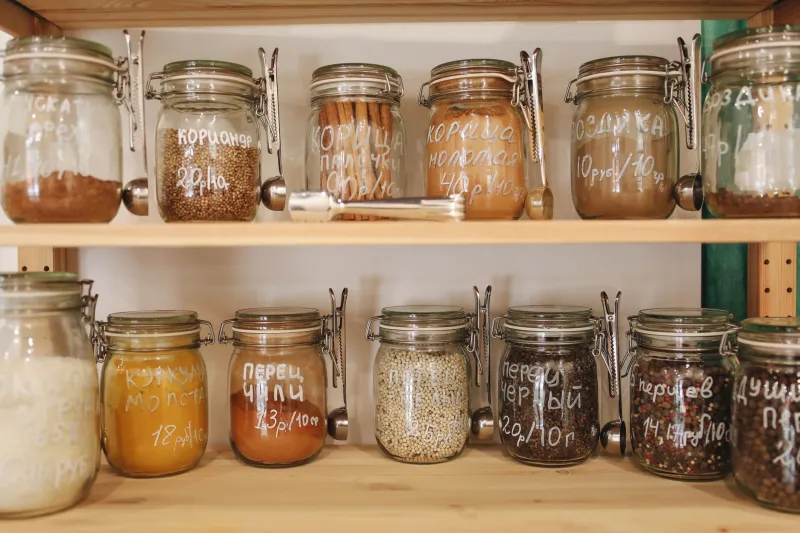
Let's talk about that spice rack for a second.
If you've ever wandered the aisles of Whole Foods, Trader Joe's, or even a mid-range grocery store in the US, you've probably noticed that a small jar of organic turmeric runs anywhere from $8 to $14. Cardamom pods? Closer to $12 for a tiny 2-ounce pouch. And don't even get started on Ashwagandha supplements or saffron — those can push $25 to $40 for quantities that would last a dedicated home cook maybe a month.
Here's the part that stings a little: the brands behind many of these products source their raw ingredients directly from India, process them with minimal additional steps, slap on a wellness-forward label, and mark them up somewhere between 200% and 400% for the Western market. The spice itself hasn't changed. The soil it grew in hasn't changed. What changed is the journey it took to reach your cart — and every stop along the way added a zero.
How the Markup Machine Actually Works
India produces roughly 75% of the world's spices. Turmeric, cumin, coriander, cardamom, black pepper, fenugreek — if it's in your spice drawer, there's a very good chance it started its life on a farm in Kerala, Rajasthan, or Tamil Nadu.
From the farm, these spices move through a chain: local aggregator → regional wholesaler → export broker → international importer → US distributor → retailer → you. Each link in that chain adds margin. By the time a "premium organic" brand packages turmeric in a matte-finish jar with a Sanskrit word on the label, the markup can be staggering.
A 500-gram bag of high-quality turmeric powder from a reputable Indian seller on a platform like BigBasket, Jiomart, or IndiaMART retails for the equivalent of roughly $2.50 to $4.00 USD. That same weight, repackaged and sold as a wellness product in the US? You're looking at $18 to $30, sometimes more.
The math is not subtle.
Specific Products Where the Gap Is Widest
Turmeric (Haldi) This one's the poster child of spice arbitrage. Brands like Organic India, Himalaya, and even store-label organics at Whole Foods are selling turmeric that originates from the same Indian growing regions you can buy from directly. On Indian platforms, 1 kg of certified organic turmeric powder from established sellers runs about $3–$5. US retail equivalent for comparable quality: $25–$45.
Green Cardamom Cardamom is one of the world's most expensive spices by weight, but that price is still dramatically lower in India than in the US. On Indian grocery platforms, 100 grams of premium green cardamom from Kerala — the gold standard — costs around $2.50 to $4. In a US grocery store, you're paying $10 to $15 for the same amount, often from a brand that imported it from the exact same region.
Ashwagandha Supplements The Ayurvedic wellness market in the US has exploded, and with it, the price of adaptogens. A month's supply of Ashwagandha capsules from a trendy US wellness brand can run $30 to $50. The same product — sometimes literally the same manufacturer — sells in India for $6 to $10. Brands like Himalaya Herbals and Dabur are household names in India, widely available on Indian e-commerce sites, and priced for an Indian consumer's budget.
Saffron Saffron is genuinely expensive everywhere, but the gap between Indian retail and US retail is still notable. Premium Kashmiri saffron — considered among the world's finest — sells for around $8 to $15 per gram on Indian platforms. US specialty retailers routinely charge $20 to $35 for the same quantity, often for Iranian or Spanish saffron that doesn't carry the same flavor profile.
Navigating Indian Food E-Commerce as an American Shopper
Here's where it gets practical. A few platforms are worth knowing:
BigBasket is India's largest online grocery platform and carries an enormous range of spices, superfoods, and packaged foods. Pricing is transparent, quality is generally reliable, and they stock both well-known brands and regional specialties.
Jiomart, backed by Reliance Industries, is another major player with competitive pricing and a wide catalog. Think of it as India's answer to Walmart Grocery.
IndiaMART functions more like a B2B marketplace, which means you can sometimes buy in bulk directly from wholesalers. If you're comfortable ordering larger quantities — say, splitting a bulk order with friends or family — the per-unit prices drop even further.
Amazon India (amazon.in) is a legitimate option too. It carries many of the same brands you'd recognize from US health food stores, but at Indian market prices.
The Shipping Question (It Matters More Than You Think)
Okay, let's be honest about the catch: international shipping from India to the US isn't free, and it's not always fast.
For lightweight dry goods like spices, shipping costs typically run $15 to $30 for small packages via services like India Post or private couriers. That changes the math on small orders — if you're buying one jar of cardamom, shipping might wipe out your savings entirely.
The strategy that actually works is bulk ordering. If you're buying 2 kg of turmeric, 500g of cardamom, a few bags of dried fenugreek, and a couple of supplement bottles all in one shipment, your per-item shipping cost drops significantly and the overall savings become very real. A $60 order that would have cost you $180+ at a US health food store, plus $20 in shipping, still puts you well ahead.
Some shoppers coordinate group buys with friends or within Indian-American community groups — this is genuinely common and a smart way to hit minimum order thresholds and split shipping costs.
A Word on Quality and Trust
One concern that comes up a lot: how do you know what you're getting is actually good quality?
Fair question. The answer is to stick with established brands that have verifiable reputations. Himalaya Herbals, Organic India, Patanjali, MDH, and Everest are all brands with decades of history and quality track records. Reviews on Indian platforms tend to be detailed and honest — Indian consumers are not shy about calling out a bad product.
For raw spices from smaller sellers, look for sellers with high volume and strong ratings, and don't be afraid to start with a smaller test order before committing to a bulk purchase.
The Bottom Line
The Western wellness industry has done something genuinely clever: it took ingredients that have been part of everyday Indian cooking and medicine for thousands of years, gave them a rebrand, and sold them back to global consumers at a significant markup. That's not necessarily sinister — marketing and distribution cost money — but it does mean American consumers are paying a premium that isn't always connected to quality.
Buying direct from Indian e-commerce platforms won't work for every grocery run. But for shelf-stable pantry staples — spices, dried herbs, Ayurvedic supplements, superfoods — it's one of the more straightforward ways to dramatically cut your food budget without cutting corners on quality.
Your turmeric latte is going to taste exactly the same. It'll just cost a whole lot less.