The Price Gap Is Real: How Indian E-Commerce Brands Are Quietly Undercutting Amazon and Walmart
Let's be honest — most American shoppers have no idea how much they're overpaying. You grab a set of cotton bed sheets from Target for $89, feel okay about it, and move on. But somewhere across the Pacific (well, technically the Indian Ocean), the same thread count, the same weave, sometimes the literal same factory is selling that product direct to consumers for $24. That gap — sometimes 30%, sometimes closer to 70% — isn't a fluke. It's structural. And it's why Indian e-commerce is having a very quiet, very significant moment with deal-hunters in the US.
Here at CheapestIndia, we exist specifically to help you close that gap. So let's break down why Indian brands can price this aggressively, and more importantly, how you can actually shop them without getting burned.
It Starts With the Supply Chain (And It's Not What You Think)
People hear "cheap Indian products" and immediately picture low quality. That's a stereotype worth retiring. What's actually driving the price difference has almost nothing to do with material quality and everything to do with how goods move from production to your front door.
In the US, a product typically passes through an importer, a national distributor, a regional warehouse, and finally a retailer — each adding their own markup before it hits a shelf or an Amazon listing. By the time you're clicking "Add to Cart," you might be paying four or five layers of margin on top of the actual manufacturing cost.
Indian direct-to-consumer brands, especially those that have built out international shipping in the last five years, skip most of that chain entirely. The manufacturer is the seller. They pack the product, slap on a DHL or FedEx label, and it lands at your door in 7–14 days. No middlemen. No retail overhead. No regional distribution center eating into the margin.
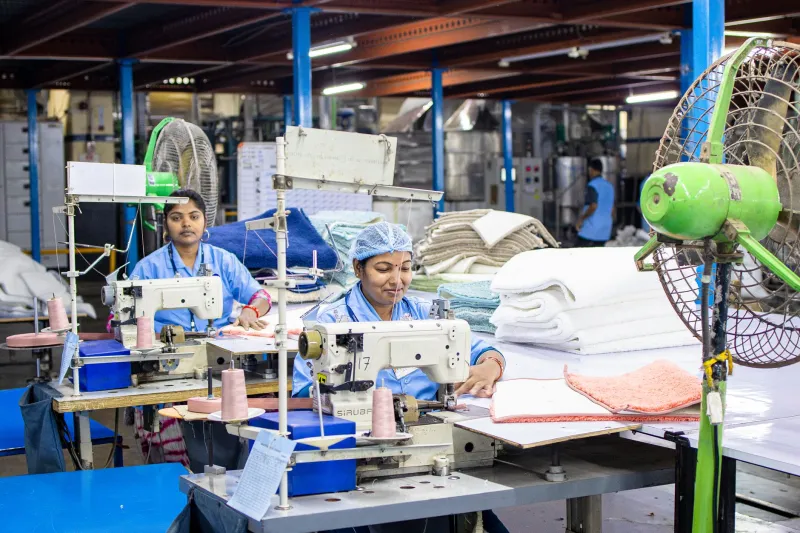
Add to that the fact that India's manufacturing hubs — places like Tiruppur for textiles, Moradabad for brassware, Surat for fabrics, and Pune for electronics components — have spent decades optimizing for export-scale production. These aren't small cottage operations. They're sophisticated facilities that supply to global brands, and now they're increasingly selling under their own labels at a fraction of the branded price.
Labor Economics, But Make It Nuanced
Okay, yes — labor costs in India are lower than in the US or Western Europe. That's a real factor. But framing it purely as "cheap labor" misses a more interesting story.
India has one of the largest skilled manufacturing workforces on the planet. The country graduates hundreds of thousands of engineers, textile technicians, and industrial designers every year. When a brand like FabIndia or a smaller DTC label out of Jaipur produces a hand-block-printed kurta or a set of brass kitchen utensils, they're drawing on generations of craft expertise that simply doesn't exist at scale anywhere in the West.
The labor cost advantage is real, but so is the craft advantage. You're not just getting something cheaper — in many categories, you're getting something better, made by people who've been doing this specific thing for a very long time.
Marketing Overhead: The Hidden Cost You're Always Paying
Here's one that doesn't get talked about enough. Major Western consumer brands spend enormous amounts on marketing. We're talking 15–30% of revenue in some categories. Every Super Bowl ad, every influencer campaign, every glossy magazine spread gets baked into the price of whatever you're buying.
Many Indian DTC brands, especially those targeting international buyers for the first time, are operating on lean marketing budgets. They're growing through word of mouth, niche communities, and platforms like CheapestIndia that surface them to deal-conscious shoppers. That savings gets passed directly to you.
As these brands scale, their marketing spend will likely grow. Which means right now — genuinely — is a good time to be paying attention.
Categories Where the Savings Are Most Dramatic
Not every product category is created equal when it comes to the India price advantage. Here's where the gap tends to be widest:
Textiles and Home Linens This is the poster child. India produces roughly 22% of the world's cotton, and the country's textile industry is vertically integrated in a way few others are. Brands like Rangoli Living, Cocoon Comforts, and various Etsy-adjacent Indian sellers on dedicated platforms offer bed linens, throws, and curtains at prices that are genuinely hard to believe until you actually wash and use them.
Handcrafted Jewelry and Accessories Silver jewelry from Rajasthan, brass bangles, semi-precious stone pieces — the markup on these in US boutiques is staggering. Indian artisan brands selling direct can offer comparable or superior pieces at 40–60% less.
Ayurvedic and Wellness Products The global wellness industry has made turmeric, ashwagandha, and neem household names in the US. But buying these through American supplement brands means paying for branding and distribution. Indian-origin brands selling the same formulations direct are consistently cheaper, and often purer.
Electronics Accessories and Components This one surprises people. India's electronics manufacturing sector has grown significantly, and for accessories — cables, phone cases, laptop bags, audio gear — there are Indian brands offering quality that competes with mid-tier Western brands at entry-level prices.
Handicrafts and Home Décor Papier-mâché from Kashmir, blue pottery from Jaipur, dhokra metalwork from Chhattisgarh — these are genuinely unique items. In a US home décor store, a single decorative piece might run $60–$120. Bought direct from an Indian artisan brand, you're looking at $15–$40 for comparable or identical work.
So How Do You Actually Shop This?
This is where a lot of US shoppers hit a wall. You're interested, but you don't know where to start, and the idea of navigating unfamiliar websites and international shipping feels like a lot.
Here's a practical approach:
Start with aggregators and curated platforms. Sites like CheapestIndia do the legwork of finding legitimate Indian sellers with solid international shipping track records. You're not flying blind — you're getting vetted options with price comparisons already done.
Check shipping policies before you fall in love with a product. Most reputable Indian DTC brands ship internationally via DHL, FedEx, or India Post EMS. Delivery times range from 7 to 21 days depending on the service. Factor that into your planning — this isn't a last-minute gift situation.
Understand the customs situation. For most personal-use purchases under $800, US Customs won't charge import duties (that's the de minimis threshold). For larger orders, it's worth checking the HTS code for your product category.
Read reviews from international buyers specifically. A brand might have 500 glowing reviews from Indian customers and a very different track record with international shipping. Filter for reviews that mention the US or international delivery.
Start small. Order one item before committing to a bulk purchase. Get a feel for the brand's packaging, quality, and customer service before you go all in.
The Bottom Line
The price gap between Indian e-commerce brands and their Western counterparts isn't closing anytime soon. If anything, as more Indian manufacturers build out their direct-to-consumer infrastructure, the savings available to informed US shoppers are going to grow. The brands that figure out international logistics and customer trust first are going to be the next big thing in global e-commerce — and right now, you can shop them before everyone else catches on.
That's kind of the whole point of CheapestIndia. We're not here to sell you on buying Indian products out of some abstract sense of economic curiosity. We're here because the deals are genuinely good, and we think you deserve to know about them.